
Return Courier Service in Australia: How to Send a Parcel Back
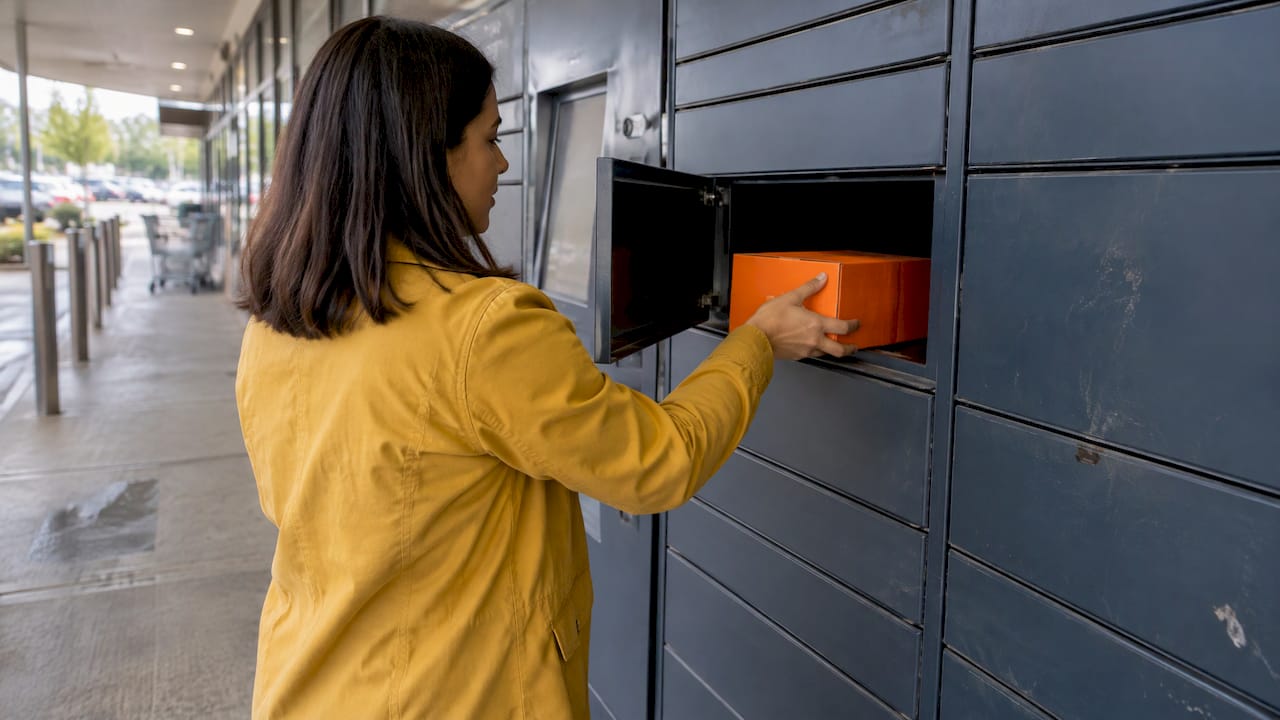
A return courier service is simply a courier booking in the opposite direction: the parcel travels from the customer back to the seller, with a label, a drop-off or pickup, and tracking that proves it was handed over. The cheapest and least stressful way to do it is to price the return like any other shipment, comparing real quotes before you book. On Sendaparcel you can compare courier quotes in one place, with no platform booking fees and insurance included.
This guide covers both sides of the parcel: the shopper sending something back and the seller who wants returns to cost less and cause fewer disputes.
Sendaparcelsendaparcel.com.auCompare Return Shipping QuotesCompare real courier prices for returns in one place, with no platform booking fees and insurance included.VisitTL;DR
- A return is a normal parcel with a different sender and recipient. Weight, size and distance set the price, so measure the box before you book.
- Three routes cover almost every return: a label supplied by the seller, postage the customer arranges, or a collection from the customer’s door.
- A return label is a transport instruction, not a promise of a refund. Keep your proof of handover until the money lands.
- Sellers save by pricing returns from live quotes, not from an old rate card, and by reusing saved parcel sizes and address details.
- You send the parcel back, not the courier. If a delivery driver is the problem, the fix is a redelivery or a claim, not a return.
Table of Contents
- What a return courier service actually is
- Who pays for the return
- The three ways to send a return
- How to return a parcel, step by step
- What does it cost to send a parcel back?
- For sellers: setting up returns that do not drain your margin
- Common mistakes on returns
- Book your return with Sendaparcel
- Our view on returns
- FAQ
- Sources
What a return courier service actually is
People search “return courier service” for two different jobs, and the answer differs for each.
The first is a shopper with an item they want to send back: a jumper that does not fit, a gadget that stopped working, an online order that was not what the listing showed. The second is a seller or small business that needs a repeatable way to get those items home again without every return turning into an email chain.
Both need the same four things:
- A label that tells the carrier where the parcel is going.
- A handover to the carrier, either a drop-off or a pickup.
- Tracking, so the seller can see it is on its way.
- Proof, so the refund or exchange is not held up while everyone argues about where the parcel is.
A question that comes up often is whether you can return a courier. You cannot, in the sense people mean. What goes back is the parcel. If the driver left it in the wrong place, missed you or damaged it, that is a delivery problem handled through redelivery or a claim, which is a separate process from sending a purchase back.
Who pays for the return
It depends on why the item is going back, and it is worth knowing before you book anything.
When a product has a fault that breaks a consumer guarantee, the buyer is entitled to a remedy of repair, replacement or refund, and the ACCC says that consumers should keep receipts for postage or transport costs so that the business can repay them. The consumer guarantees are the basic rights Australian law gives buyers: products must be of acceptable quality, match their description and do what they are supposed to do. The same ACCC page says businesses cannot use store policies to deny those rights.
For a simple change of mind, the rules are the seller’s own policy. Many retailers set a window of around 30 days, and some pay for the label while others deduct a return fee from the refund. Read the returns page of the shop before you ship.
Practical rule: if you are sending back a faulty item, keep every postage receipt. If it is a change-of-mind return, check the seller’s policy first so you are not paying twice.
The three ways to send a return
Australian retailers generally offer one of three routes, which the Returns Management Guide describes as a retailer-provided label, customer-arranged postage and arranged collection. Each suits a different parcel.
1. A prepaid label from the seller
The seller emails a PDF or a code. You print it, attach it, and drop the parcel off. You should not pay the carrier directly, because the charge goes to the seller’s account. It is the smoothest option for the customer, and it makes sense for sellers who process a steady stream of returns.
Two details trip people up. First, remove or cover the old outbound labels so the scanner reads the right one. Second, check the size and weight limits written on the label instructions. A matching return label, for example, is built around the same dimensions and weight as the outbound parcel.
2. Customer-arranged postage
The customer books and pays for the return, then claims the cost back or accepts a deduction. This is common for change-of-mind returns and for marketplace sellers without a returns system. It is also where price comparison matters most, because the customer is choosing a carrier from scratch.
3. Arranged collection
A courier collects the parcel from the customer’s door. This is the right call for large, heavy or awkward items, or for customers who cannot get to a drop-off point. Collection services usually have weight and size limits, restricted time windows and sometimes a fee for pickup.
How to return a parcel, step by step
Here is the routine, with the points where returns usually go wrong.
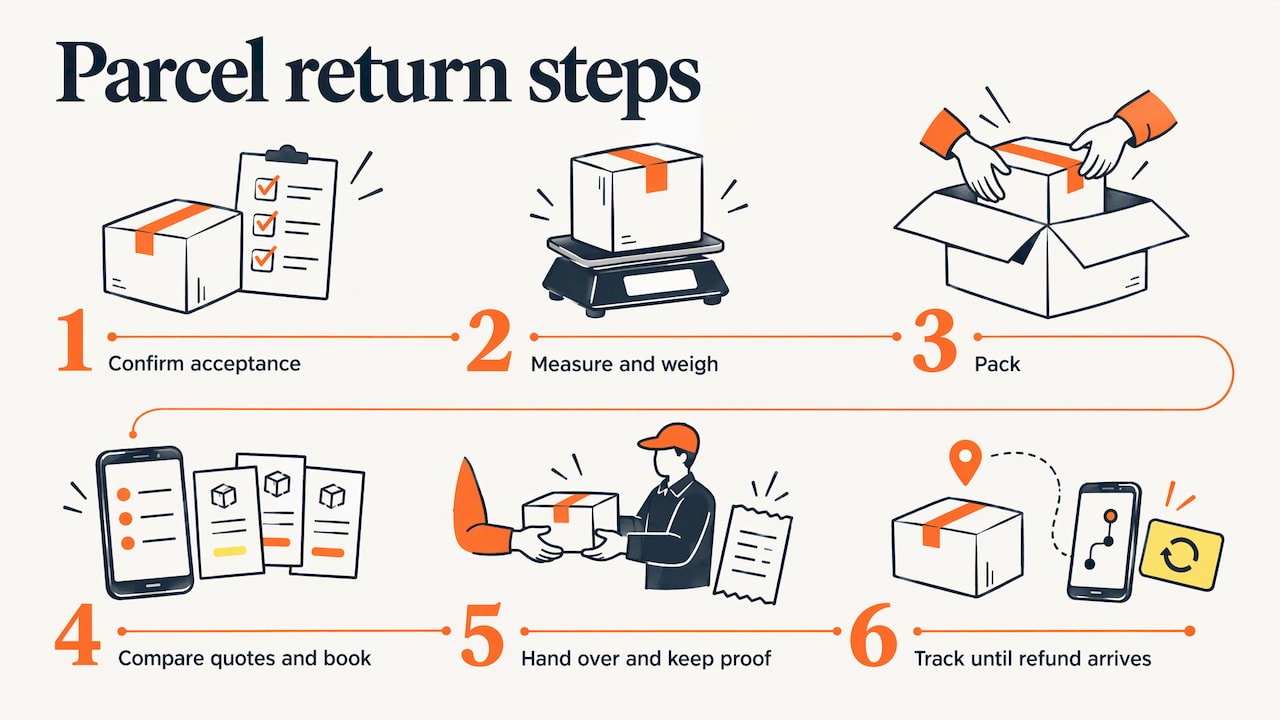
Step 1: Confirm the return is accepted
Check the seller’s policy, the time limit and whether the item must be unused or in original packaging. A courier label does not approve a refund. The Returns Management Guide makes the same point: a label is a transport instruction, and fitting within a carrier’s limits does not mean the item should be sent that way.
Step 2: Measure and weigh the parcel
Price is driven by weight and size, so do this before you look at quotes. Measure length, width and height in centimetres and weigh the packed parcel, not the bare item. A box that is 2cm bigger than you guessed can move you into a different price band.
On Sendaparcel you can save parcel sizes in your dashboard, so repeat shippers do not remeasure the same box every time.
Step 3: Pack it so it arrives in a refundable state
Use a sturdy box or satchel, cushion fragile items and seal every opening. If the parcel is damaged on the way back, a refund can stall. Remove or cover old labels and put the new one on the largest flat face.
Step 4: Compare quotes and book
This is where most returners overpay: they take the first option they see. Carrier prices for the same box can differ considerably by route, and the price you want is the all-in one, including any fees. Our platform shows real-time quotes from multiple carriers with a clear price breakdown. There are no platform booking fees, and insurance is included. You can also see how redelivery fees work before you book, so a missed collection does not come as a surprise.
For a deeper look at pricing, see our guide to how to compare parcel postage rates and our walkthrough on the cheapest way to send a parcel in Australia.
Step 5: Hand it over and keep the proof
Drop the parcel at a carrier counter, a street box or a parcel locker, or be home for the pickup. Parcel lockers are open around the clock. Australia Post’s network has more than 1,500 free 24/7 lockers where eligible parcels up to 16kg can be sent or returned. If your return is heading to a locker, our guide on delivering a parcel to a parcel locker covers the practical points.
Keep the receipt, the tracking number and a photo of the parcel with its label. A driver scan or a drop-off receipt is the evidence you will need if a refund is questioned.
Step 6: Track it until the refund arrives
Track the return from the moment it is lodged. Refund timing is set by the retailer, and some retailers state it as up to 14 days after the parcel is received. Keep your proof until the money is back in your account.
What does it cost to send a parcel back?
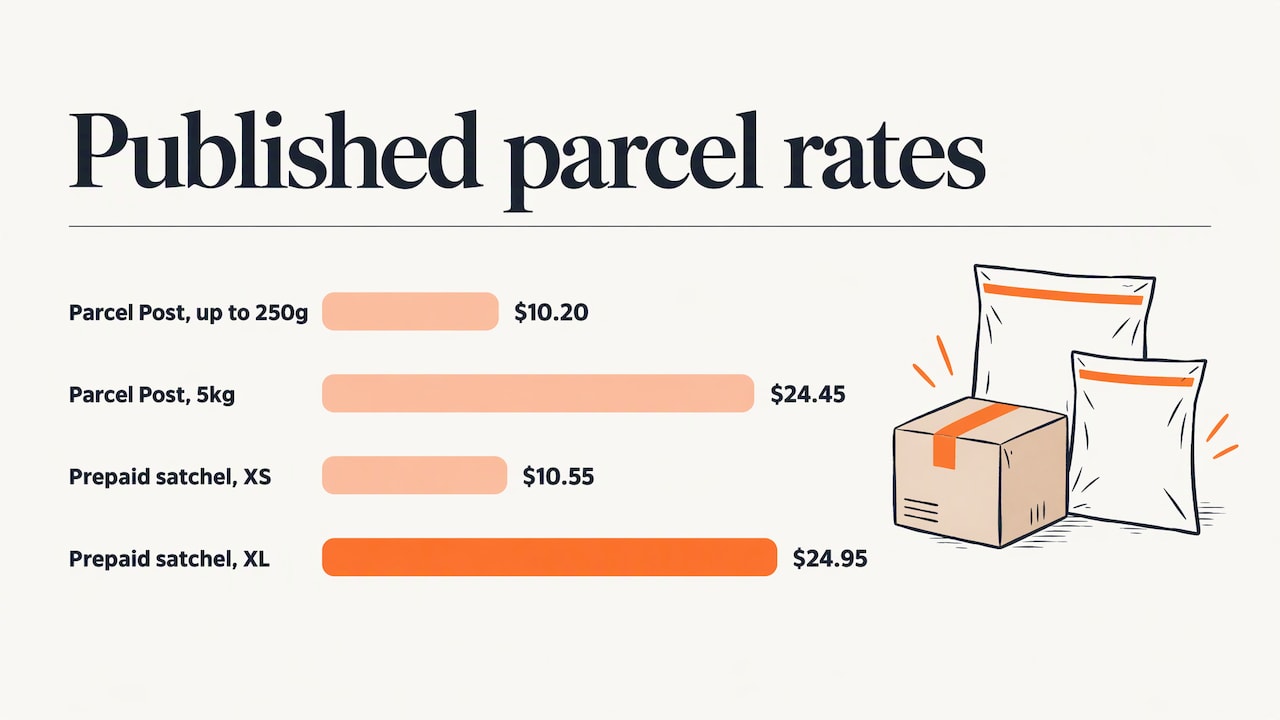
Cost comes down to weight, size and the route. For context, the carrier’s own published rates give a feel for the range. In its Post Charges Guide effective 1 September 2026, Australia Post lists Parcel Post flat rates from $10.20 for up to 250g to $24.45 for 5kg, with prepaid satchels from $10.55 (XS) to $24.95 (XL) including packaging. Parcels over 5kg and up to 22kg carry a basic charge plus a per-kilogram distance charge by zone.
Those are published rates for one period. Carrier prices change, typically on a yearly schedule, and a mid-2026 increase averaged 4.95% on Parcel Post, according to an industry alert. So price each return from a live quote, not from last year’s rate card or a percentage applied to an old figure.
| What changes the price | Why it matters on a return |
|---|---|
| Weight | The heaviest driver of cost, billed in bands |
| Parcel dimensions | A bigger box can push a light parcel into a higher band |
| Distance | Local returns are often cheaper than interstate ones |
| Pickup or drop-off | Collection can carry an extra fee |
| Insurance | A damaged return can hold up a refund, so cover matters |
Our courier services page shows the options we offer, and for a local return, the local courier option lets you compare quotes for short-distance runs. When a customer needs an item back to you fast, there are same-day courier options.
For sellers: setting up returns that do not drain your margin
Returns are a cost of doing business online. The aim is to make them predictable.
Decide your return routes. Offer a label for faulty or wrong items, and customer-arranged postage for change-of-mind returns if your policy says so. Say clearly in your policy who pays, so there is no argument at the counter.
Price from live quotes. A flat return fee that was set a year ago may now lose you money. Pull a quote for typical return sizes, work out the average and update it when carrier rates change.
Cut the manual work. On Sendaparcel, sellers can connect Shopify, WooCommerce, eBay and Wix stores, upload shipments in bulk from Excel, and use an address book and saved parcel sizes. If you already hold courier accounts, you can bring your own. Together these remove much of the retyping that makes returns slow. Our guide to the best e-commerce courier in Australia goes through what to look for.
Earn from regular volume. Frequent shippers earn rewards on the platform, which helps when returns and outbound orders are both part of your monthly parcel count.
Keep a paper trail. A return that can be shown to have been handed over is a return that can be refunded without friction. Even a different industry shows why: a proof of delivery photo is what settles a dispute about whether a load arrived, and the same logic applies to a returned parcel: a dated photo and a scan are what settle it.
Common mistakes on returns
- Leaving the old label on. The scanner may send the parcel back to the customer’s own address.
- Guessing the size. A wrong dimension can lead to a surcharge or a rejected booking.
- Skipping proof. No receipt and no tracking number means no evidence.
- Assuming a label equals a refund. The refund is the seller’s decision under its policy and the law.
- Sending oversized or restricted items by a route that cannot carry them. Large items need collection, not a counter drop-off. Dangerous goods are excluded from many return services.
For more on returns at the post office end, see our guide to posting parcels for returns in Australia and the basics in how to post a parcel.
Book your return with Sendaparcel
Whether you are a shopper sending one parcel back or a seller handling dozens a week, the sensible move is to see the real prices side by side. Sendaparcel offers parcel delivery, satchel delivery and same-day delivery across Australia, shows a transparent price breakdown, and charges no platform booking fees. Insurance is included, and regular shippers earn rewards.

Get a courier quote on Sendaparcel and book your return in a few minutes.
Our view on returns
Returns are where a courier price stops being abstract. A customer has a parcel on the kitchen table and a deadline, and a seller has a margin that can disappear if the shipping cost is a surprise.
That is why we built Sendaparcel around transparency. You see real-time quotes from multiple carriers, a clear price breakdown and the way redelivery fees work, before you pay. We do not add platform booking fees, and insurance is included, so the number you see is the number you are working with.
For sellers, the real saving is in routine. Saved parcel sizes, an address book, Excel bulk uploads and integrations with Shopify, WooCommerce, eBay and Wix mean the tenth return of the week takes no longer than the first. Bring your own courier accounts if you have them, and earn rewards the more you ship.
Our advice is simple: measure the parcel, compare live prices, keep your proof of handover and make the return as easy as the original order. Do that and returns become a normal part of trading, not a problem.
Aeros
FAQ
Can you return a courier?
No. What you return is the parcel, not the courier. If the delivery went wrong because the driver missed you, left the parcel in the wrong place or damaged it, the answer is a redelivery or a claim for the shipment. If you simply want to send the purchase back, you book a return shipment.
What is the cheapest way to return a parcel in Australia?
The cheapest route is usually the one matched to your parcel’s real weight and size, so measure first and compare live quotes. A flat-rate satchel can suit small, light items, while a bigger or heavier box often prices better on a comparison. Drop-off is generally cheaper than a pickup, which can carry an extra charge. Our guide to finding the cheapest parcel postage goes into more detail.
Who pays for return shipping in Australia?
If an item has a fault that breaks a consumer guarantee, the business should cover reasonable return costs, and you should keep your receipts. For a change-of-mind return, it depends on the seller’s policy, and some retailers deduct a return fee from your refund. Check the returns page before you ship.
Do I need to be home for a return pickup?
Often yes. Collection services typically attempt a pickup in set time windows on business days, and some require an adult to hand over the parcel. If you cannot be there, a drop-off at a counter or parcel locker avoids a missed pickup and a possible redelivery fee.
What proof should I keep when I send something back?
Keep the drop-off receipt or driver scan, the tracking number, and a photo of the packed parcel with its label. That evidence supports your refund if the seller says the parcel has not arrived.
Sources
- ACCC: Repair, replace, refund, cancel
- Parcel Lockers send
- Post charges guide, 1 September 2026
- Australia Post price increase 2026: what changed
- Return shipping and labels for Australian retailers
- Proof of delivery photos